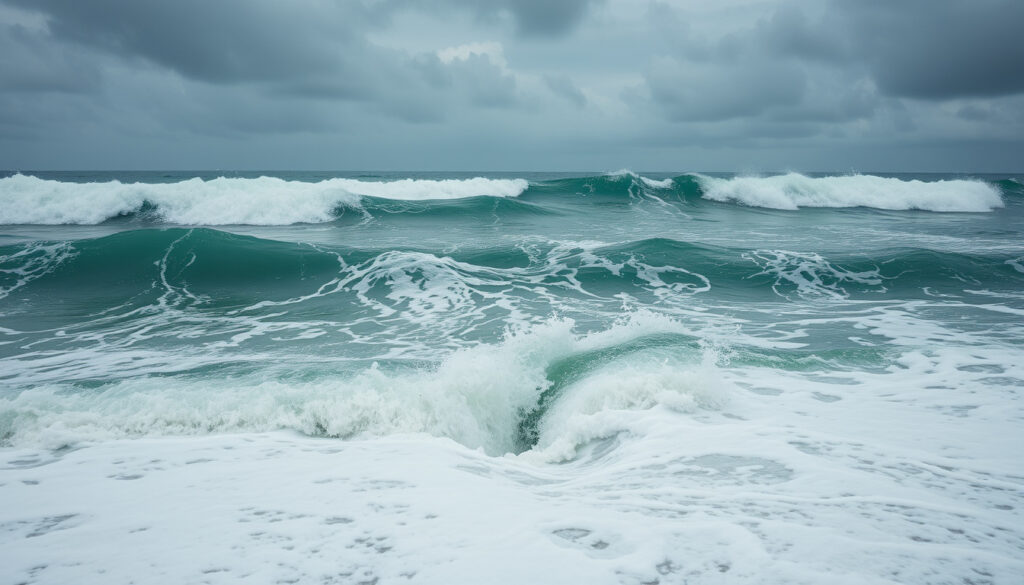
RNLI Safety Warning Waves – Spot Rip Currents and Stay Safe
The Royal National Lifeboat Institution (RNLI) has renewed its call for beachgoers to exercise extreme caution around dangerous wave conditions, particularly those created by rip currents. These powerful water movements account for the majority of RNLI lifeguard rescues across UK beaches each year, with statistics indicating that more than 60% of such incidents involve swimmers caught in these deceptive channels of fast-moving water.
Rip currents pose a significant threat because they often appear deceptively calm. They form where waves break unevenly, pushing water toward the shore that must find a pathway back out to sea. This return flow concentrates into narrow, fast-moving channels that can pull even confident swimmers away from the coast without warning. Understanding the nature of these hazards is considered essential knowledge for anyone planning to enter the water at British beaches.
The RNLI advises that swimmers should always choose lifeguarded beaches and enter the water only between the red and yellow flags marking supervised zones. These designated areas are monitored by trained personnel equipped to identify dangerous conditions and intervene when necessary. Officials stress that even experienced ocean swimmers can find themselves in difficulty if they encounter a rip current unexpectedly.
Understanding the RNLI Wave Safety Warning: A Complete Overview
The RNLI wave safety warning encompasses several distinct hazards that beach visitors may encounter. Below is a structured guide to the primary concerns and recommended responses.
Rip currents, sneaky waves, and sudden wave breaks that can knock swimmers off their feet or pull them away from shore.
Over 60% of RNLI lifeguard rescues in the UK involve rip currents, making them the leading cause of beach water incidents.
Swim between flags, recognize rip current signs, and follow established escape techniques if caught in a current.
Any UK beach with breaking waves, particularly areas where wave patterns create natural channels for water return.
Key Facts About Rip Currents
- Rip currents do not pull swimmers underwater; they carry people away from shore horizontally at speeds that exceed the swimming ability of most people
- These currents frequently appear as calm channels between areas of breaking waves, often displaying as darker, smoother water surfaces
- Debris or foam floating steadily seaward can indicate the presence of a rip current
- Even on sunny, calm days, dangerous rip currents can form rapidly as tide and wave conditions change
- Swimmers caught in rip currents most commonly drown not from submersion but from exhaustion caused by panic and unsuccessful attempts to swim directly against the flow
- The RNLI emphasises that anyone caught should remain calm, as rip currents rarely extend beyond the surf zone and often loop back toward the beach
- Lifeguards receive specialised training to identify and mark rip current zones using the flag system
Essential RNLI Safety Statistics
| Statistic | Detail | Source |
|---|---|---|
| RNLI rescue involvement | Over 60% of lifeguard rescues involve rip currents | Met Office / RNLI |
| Global drowning cause | Rip currents rank as a major cause of accidental drownings worldwide | Met Office / RNLI |
| Primary danger mechanism | Panic and exhaustion, not submersion | Met Office / RNLI |
| Recommended swimming zones | Between red and yellow flags at lifeguarded beaches | Met Office / RNLI |
| Emergency contact | 999 or 112 for Coastguard | Met Office / RNLI |
How to Identify Dangerous Wave Conditions
Recognising the visual indicators of rip currents and dangerous wave formations can significantly reduce the risk of finding oneself in difficulty. The Met Office, in collaboration with the RNLI, has published guidance helping beach visitors identify these hazards before entering the water. For detailed information on beach and water safety, visitors can consult the Met Office coastal forecasts which provide regular updates on sea conditions.
Visual Signs of Rip Currents
Rip currents frequently betray their presence through several tell-tale visual characteristics. Areas of choppy, churning water that interrupt otherwise regular wave patterns often indicate a rip channel. Darker patches of water between bands of whitecaps or breaking waves can signify where water is flowing seaward rather than toward the shore.
Floating debris such as seaweed, foam, or buoyant objects moving steadily outward through the surf zone should alert swimmers to potential danger. These channels commonly form in locations where underwater sandbars create natural pathways for the return flow of water that has accumulated near the beach. The RNLI notes that swimmers often mistakenly enter these calm-looking channels because they appear safer than the surrounding breaking waves.
Conditions That Increase Wave Danger
Certain tidal and weather conditions contribute to elevated wave hazards. Following periods of sustained offshore winds, large swells arrive that create more pronounced rip current activity. When tides change rapidly, particularly during spring tides with larger tidal ranges, the dynamics of water movement along beaches can shift dramatically within minutes.
Rip currents do not drag people underwater. They carry swimmers parallel to and away from the shore. The danger comes from exhaustion caused by swimming against the current, not from being pulled below the surface.
Immediate Actions If Caught in a Rip Current
The RNLI has established clear protocols for swimmers who find themselves caught in a rip current. These procedures have been developed based on extensive rescue experience and have proven effective in numerous documented cases. For those interested in outdoor water safety, understanding these response techniques is considered vital knowledge.
The RNLI Recommended Escape Technique
The first and most critical step is to remain calm. Panic causes rapid exhaustion and is the primary factor in most rip current fatalities. Instead of attempting to swim directly back to shore against the current, which exhausts even strong swimmers within minutes, the recommended approach involves swimming sideways, parallel to the beach.
Once free of the current’s pull, swimmers should angle themselves toward the breaking waves and allow the wave action to carry them back toward the shore. If at any point standing becomes possible, wading is preferable to swimming as it conserves energy. Those with flotation devices such as bodyboards or inflatable toys should hold onto them tightly as they provide essential buoyancy.
Stay calm, avoid swimming directly against the current, swim parallel to the shore until free from the rip’s pull, then head diagonally toward the beach. If you can stand, wade instead of swim.
What Observers Should Do
Beach visitors who witness someone else struggling in the water should not attempt their own rescue unless they have received formal training. The appropriate response is to attract the attention of lifeguards immediately by waving and shouting. If no lifeguards are present, emergency services should be contacted by dialling 999 or 112 and requesting the Coastguard. For those interested in historical military events, the Battle of the Somme first day offers further insight.
Regional Context: Why UK Beaches Face Specific Risks
The geographical characteristics of many UK beaches contribute to wave conditions that can produce powerful rip currents. The combination of sandy shores, gradual seabed slopes, and exposure to Atlantic weather systems creates ideal conditions for these hazards to develop. The RNLI has documented how certain coastal configurations, particularly around headlands and sandbar formations, concentrate these dangerous currents. Those planning beach activities should review RNLI beach safety guidelines before visiting.
Seasonal Patterns
Incident data consistently shows elevated rip current dangers during the summer months when beach visitation peaks. Warmer weather brings larger crowds to coastal areas, increasing the number of people potentially exposed to wave hazards. Additionally, summer conditions often appear deceptively calm, encouraging swimmers to underestimate the power of the sea.
The Met Office advises that even during settled summer weather, conditions can change rapidly as tides shift and offshore winds pick up. Those planning coastal activities should consult local tide tables and weather forecasts before heading to the beach. For those travelling by cruise ship, such as the P&O Iona Guide, shore excursion coordinators typically provide guidance on beach safety at destinations visited.
Confirmed Facts Versus Common Misconceptions
Understanding what rip currents can and cannot do is essential for maintaining appropriate caution. Several widespread beliefs about these hazards require clarification based on established oceanographic understanding.
| What Is True | Common Misconception |
|---|---|
| Rip currents flow horizontally away from shore, not downward | Many believe rip currents drag swimmers under the water |
| Staying calm and floating can allow survival even without swimming ability | Swimmers assume they must actively fight the current |
| Most rip currents loop back toward the beach or along the shore | People believe rips always pull swimmers straight out to sea indefinitely |
| Visible calm water between breaking waves often indicates the strongest rips | Swimmers frequently choose these calm areas believing they are safe |
| Any beach with breaking waves can produce rip currents, not just stormy conditions | People assume rips only occur during rough weather |
The Broader Significance of Wave Safety Warnings
The RNLI issues wave safety warnings as part of a comprehensive public education strategy aimed at reducing beach-related fatalities. These warnings reflect the organisation’s extensive operational experience, gained through thousands of rescues conducted annually by trained lifeguards stationed along the UK coastline. The data informing these warnings comes from systematic incident recording and analysis of the conditions present during rescue operations.
The Met Office works in partnership with the RNLI to ensure that weather and sea condition information reaches beach users before they enter the water. This collaboration enables the dissemination of rip current forecasts alongside standard weather predictions, giving visitors advance notice of elevated hazards. Coastal communities benefit from this integrated approach to beach safety communication.
Sources and Further Information
Official guidance on understanding rip currents and wave hazards has been published by the Met Office in collaboration with the RNLI. These resources provide detailed information for beach visitors seeking to enhance their safety knowledge. Visitors can access the Met Office weather safety advice for comprehensive forecasts and guidance.
The RNLI advises swimmers to always choose lifeguarded beaches and swim between the red and yellow flags. This simple guidance has prevented countless incidents and remains the cornerstone of beach safety education.
— Met Office seasonal advice on beach safety, drawing on RNLI protocols
Those seeking additional information about specific beach conditions, lifeguard patrol schedules, and ongoing safety campaigns can consult the RNLI website directly. The organisation maintains updated resources for beach safety that complement the wave hazard warnings issued through meteorological channels.
Summary and Key Takeaways
The RNLI safety warning regarding dangerous waves and rip currents represents essential guidance for anyone visiting UK beaches. The principal message emphasises swimming only at lifeguarded locations between designated flags, recognising that even experienced swimmers face significant risk from these powerful water movements. The critical distinction lies in understanding that rip currents carry swimmers away from shore horizontally rather than pulling them underwater, with danger arising primarily from exhaustion caused by panic and unsuccessful attempts to swim against the flow. By remaining calm, floating if necessary, and swimming parallel to the shore when free from the current’s pull, survival becomes achievable for individuals of all swimming abilities. Beach visitors should consult official safety resources before entering the water and should alert lifeguards or emergency services immediately upon witnessing someone in difficulty.
Frequently Asked Questions
What exactly is a rip current according to the RNLI?
A rip current is a narrow, fast-moving channel of water flowing away from the shore through the surf zone. It forms when waves push water toward the beach that must find a path back to the sea, concentrating into a powerful outflow that can pull swimmers away from the coast.
How can I tell if a rip current is present?
Rip currents often appear as calm, dark channels between areas of breaking waves. Look for choppy or churning water, debris floating steadily seaward, or gaps in wave patterns. These visual cues indicate where water is flowing away from shore.
Should I try to swim directly back to shore if caught in a rip current?
No. Swimming directly against the current rapidly exhausts even strong swimmers. Instead, swim parallel to the shore until free from the current’s pull, then angle toward the beach allowing wave action to assist your return.
Do rip currents pull swimmers underwater?
No. Rip currents flow horizontally away from the shore, not downward. They carry swimmers through the water’s surface. Drowning typically occurs from exhaustion when swimmers exhaust themselves fighting the current.
What percentage of RNLI rescues involve rip currents?
Over 60% of RNLI lifeguard rescues in the UK involve rip currents, making them the leading cause of beach water incidents requiring lifeguard intervention.
Where should I swim to minimise rip current risk?
Swim only at lifeguarded beaches between the red and yellow flags. These designated zones are monitored by trained personnel who identify and mark hazardous areas. Never swim at unguarded locations or outside flagged areas.
What should I do if I see someone struggling in the water?
Attract the attention of lifeguards immediately by waving and shouting. If lifeguards are not present, call 999 or 112 and ask for the Coastguard. Do not attempt to rescue the person yourself unless you have received specific training.
Can rip currents form on calm, sunny days?
Yes. Rip currents can develop on any day when waves are breaking, regardless of overall weather conditions. Calm, sunny days can be particularly deceptive because the pleasant conditions encourage swimmers to underestimate the sea’s power.
More related posts
 Patrick Bamford – Stats, Clubs, Wife, and Net Worth
 Miss Mary of Sweden – UK Stockists and Buying Guide
 Laura Whitmore – Age, Husband, Children and Love Island Bio
 Lisa Faulkner – Her Life, Career and 2026 Health Update
 Andrew Ridgeley Wham – Net Worth, Wife, and Current Life
 Lucien Laviscount – Biography, Emily in Paris Role and James Bond Rumors
 Fridge Freezer – Complete Buying Guide for UK Homes in 2025
 Harry Judd – McFly Drummer, Strictly Winner and Family Life