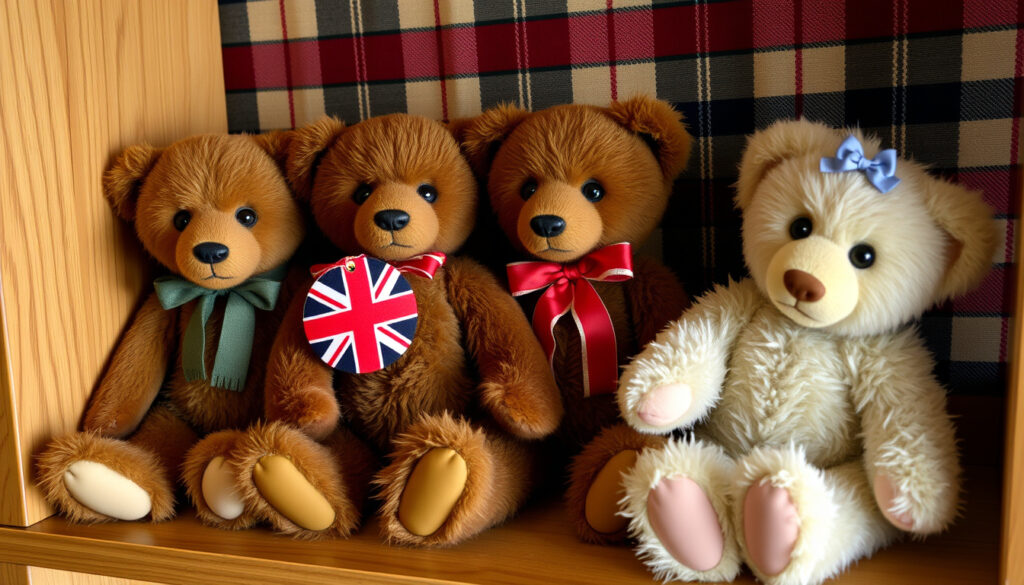
Teddy Bears – Traditional UK Brands & Buying Guide
For many, a teddy bear is more than a soft toy – it’s a companion, a collector’s prize, or a piece of British heritage. Whether you’re searching for a handmade traditional teddy bear in the UK, comparing collectible brands like Steiff and Merrythought, or simply trying to decide which size to buy, the choices can feel overwhelming. This guide brings together the history, the leading UK brands, size advice, and where to shop, so you can make an informed decision.
Traditional teddy bears remain highly sought after in the UK, with heritage brands like Merrythought producing handmade bears that start at £179. At the same time, stores like World of Bears stock over 18,000 teddy bears, reflecting a strong market for variety. The following sections break down everything you need to know.
What Are the Best Traditional Teddy Bears Available in the UK?
History & Origin
Learn how teddy bears got their name in 1902 and their evolution into beloved collectibles.
Top UK Brands
Compare Steiff, Merrythought, Jellycat, and more — quality, price, and heritage.
Size & Audience Guide
From giant 5-foot bears to tiny miniatures: find the right size for adults, children, or collectors.
Where to Buy
Best online stores and high-street shops in the UK, including current sales and stock levels.
- Merrythought is the last surviving teddy bear factory in the UK, fourth-generation family-run, offering bespoke bears.
- Steiff bears are often called the “Rolls-Royce” of collectible teddy bears, with limited editions retaining or increasing in value.
- Jellycat has become a luxury soft toy brand, modernising the traditional bear while preserving its appeal.
- World of Bears in Somerset is one of the UK’s largest teddy bear shops, stocking Steiff, Jellycat, and Charlie Bears.
- Searches for “teddy bears for adults” and “large teddy bears” indicate a significant gifting and decor market beyond children’s toys.
- Traditional teddy bears are defined by natural materials (mohair, alpaca), jointed limbs, and handcrafted production methods.
- Prices for collector-grade bears range from around £50 for smaller models to over £500 for limited Steiff editions.
| Fact | Detail |
|---|---|
| Year invented | 1902 |
| Named after | President Theodore “Teddy” Roosevelt |
| First manufacturer (US) | Morris Michtom (Ideal Novelty and Toy Co.) |
| First manufacturer (Germany) | Steiff (Margarete Steiff) |
| Typical price range (UK traditional) | £50 – £500+ (Steiff collector bears) |
| Most popular UK brands online | Merrythought, Steiff, Jellycat, Charlie Bears, Kosen |
| Number of bears at worldofbears.com | 18,000+ |
| Popular sizes | 10cm (mini) to 150cm (giant) |
Which Teddy Bear Brands Are Most Collectible?
Steiff: The Gold Standard
Founded in Germany, Steiff has been producing high-quality teddy bears since 1903. The brand is synonymous with collectibility; many limited editions – like the 1998 British Steiff collector bear – hold or increase in value. Steiff bears are made from mohair and alpaca, with a distinctive “button in ear” trademark. They are widely available in the UK through specialist retailers such as World of Bears and Bear Garden.
Merrythought: British Heritage
Merrythought has been handmaking traditional teddy bears in Ironbridge, UK, since 1930. It is the last surviving teddy bear factory in the country. Its bears are crafted from jointed mohair plush and include commemorative editions such as the HM Queen Elizabeth II Celebration Bear (£349) and HM King Charles III (£269). Merrythought bears are sold directly via their official website and at One More Bear Shop.
Jellycat: Modern Luxury
Jellycat, a UK-based brand, is known for its exceptionally soft plush toys. While not all Jellycat bears are traditional in the jointed-mohair sense, they have become highly collectible in their own right. Their teddy bears are made from the finest plush with exquisite detailing. World of Bears is a major retailer for Jellycat in the UK.
Charlie Bears & Canterbury Bears
Charlie Bears offers affordable, collectable handmade plush bears, available from charliebears.co.uk. Canterbury Bears, a family workshop near Canterbury, has been making fully handmade bears from sustainable materials for over 40 years; their official site is canterburybears.com.
Not all teddy bears are created equal for collecting. Steiff bears with intact buttons and original tags command the highest prices at auction. Merrythought limited editions, especially royal commemoratives, also hold strong value. Jellycat bears are collected for their design and softness rather than investment potential. For the most accurate valuation, consult a specialist appraiser or check recent auction results.
Where Can I Buy Teddy Bears in the UK?
Online Retailers
The largest online selection is at World of Bears, which claims over 18,000 bears in stock, covering Steiff, Jellycat, Charlie Bears, and more. Bear Garden specialises in luxury and collectible teddy bears. Teddy Bear Land offers bears filtered by size, from small to giant.
High Street Shops
Physical shops in the UK include World of Bears in Taunton, Somerset, which operates both in-store and online. One More Bear Shop stocks the full Merrythought range and sells both in-store and online. Canterbury Bears has a family workshop near Canterbury open by appointment. For antique and vintage bears, platforms like Etsy list many UK-based sellers.
Sales and promotions change frequently. The content used for this article does not contain live data on current discounts. Shoppers should always visit the retailer’s website directly to check the latest offers. Seasonal sales – such as Christmas or Black Friday – often feature discounts on popular brands like Jellycat and Charlie Bears.
Quick Reference Table
| Retailer | Brands Available | Location |
|---|---|---|
| Merrythought Official | Merrythought | Ironbridge, UK (online + in-store) |
| One More Bear Shop | Merrythought | Online & in-store |
| World of Bears | Steiff, Jellycat, Charlie Bears | Taunton, Somerset |
| Charlie Bears Official | Charlie Bears | Online only |
| Canterbury Bears | Canterbury Bears | Canterbury, UK (workshop) |
How to Choose the Perfect Teddy Bear: Size, Material, and Audience
Size Guide
Exact size charts are not publicly available for all brands, but typical models give a good indication. Merrythought’s Little Jumbo is priced at £125 and considered mid-size, while the Jester at £169 is larger. The HM Queen Elizabeth II Bear (£349) is a premium, larger piece. For giant bears, retailers like Teddy Bear Land offer options up to 150 cm. A medium bear of 30–40 cm is often recommended for toddlers, while adults may prefer a larger, more huggable size.
Materials Matter
Traditional teddy bears are made from mohair or alpaca, with jointed limbs for articulation. Steiff and Merrythought use these materials. Jellycat uses ultra-soft plush. For a bear that will last as a collectible, natural fibres and hand-stitching are signs of quality. For a child’s first bear, machine-washable plush is more practical.
Audience and Occasion
Whether the bear is for a newborn, a toddler, an adult collector, or a decorative piece changes every recommendation. For adults, a large or limited-edition bear makes a memorable gift. For children, safety standards (CE marking) and washability are key. The trend of “teddy bears for adults” is driven by comfort and nostalgia, not just play.
If you want a traditional, handmade British bear, Merrythought is your best choice. If you value investment potential and heritage, go Steiff. For modern softness and gift appeal, Jellycat is hard to beat. For a budget-friendly but still handmade option, look at Charlie Bears or Canterbury Bears.
What Is the History and Origin of the Teddy Bear?
- 1902 – President Theodore Roosevelt refuses to shoot a bear cub during a Mississippi hunting trip. Political cartoon “Drawing the Line in Mississippi” by Clifford Berryman popularises the bear story.
- 1903 – Morris Michtom creates a stuffed bear named “Teddy’s Bear” and places it in his candy shop window. Steiff in Germany independently produces the first toy bear with articulated limbs.
- 1904 – The teddy bear craze sweeps the US and Europe; Michtom founds Ideal Novelty and Toy Co.
- 1910s–1920s – Teddy bears become a staple of childhood. Steiff introduces mohair bears. Many UK and US manufacturers join the market.
- 1930s–1940s – Wartime materials shortages lead to cheaper fabrics; collectible bears from early 20th century start gaining value.
- 1980s–1990s – Teddy bear collecting boom. Specialist shops and fairs emerge. Brands like Merrythought (UK) gain international collector status.
- 2020s – Renewed interest in traditional handmade teddy bears; Jellycat becomes a luxury soft toy brand; UK high street stores see growth.
- 2025 – Online retailers like World of Bears and Bear Garden dominate the market; Steiff limited editions sell out quickly.
Are Steiff Teddy Bears Worth the Investment?
| Established Information | Information That Remains Unclear |
|---|---|
| Steiff bears have a documented history since 1903; early models with button in ear command high auction prices. | Exact value of a specific bear depends on condition, rarity, and provenance – no single price guide exists. |
| Limited editions (e.g., 1998 British collector bear) often retain or increase in value. | Future market trends are uncertain; not every Steiff bear appreciates equally. |
| Steiff uses high-quality materials (mohair, alpaca) and hand-crafting, justifying higher retail prices. | Whether a Steiff bear is “worth it” is subjective – some collectors prefer Merrythought’s style or Jellycat’s softness. |
What Makes a Teddy Bear ‘Traditional’?
A traditional teddy bear is defined by several characteristics: it is made from natural materials such as mohair, alpaca, or wool; it has jointed limbs that allow movement; and it is handcrafted or assembled by skilled workers. Historically, the first teddy bears were created in this way. Brands like Merrythought and Steiff still produce bears that meet these criteria, often using the same techniques from the early 1900s.
In contrast, modern mass-produced bears are typically made from synthetic plush, have no jointing, and are machine-sewn. While the term “traditional” is not legally protected, collectors and enthusiasts generally reserve it for bears that honour the original design and materials.
The revival of traditional teddy bears in recent years has been driven by a desire for craftsmanship, sustainability, and nostalgia. Many UK buyers seek out handmade bears as heirloom gifts or decorative pieces that stand apart from generic soft toys.
What Do Experts Say About Teddy Bears?
“The teddy bear was named by Morris Michtom celebrated in story, song, and film.”
“Four generations of the finest British teddy bear making.”
– Merrythought official site
“Over 18,000 teddy bears and friends in stock now, shipped from our UK High Street Stores.”
– World of Bears
These sources underline the enduring appeal of teddy bears as both cultural icons and collectible assets. The blend of history, brand care, and retail scale confirms that the UK remains a key market for traditional and luxury bears.
Final Thoughts: How to Find Your Perfect Teddy Bear
Whether you prioritise British heritage, investment potential, or pure softness, the UK market offers a teddy bear for every need. Start by deciding between traditional handcrafted bears from Merrythought or Steiff and modern plush from Jellycat. Use the size guide and audience tips above to narrow your choice. For a deeper look at specific brands, read our guide on Best Teddy Bear Brands for Collectors. And if size is your main concern, the Teddy Bear Size Guide: Which Size is Right for You? can help you measure up.
Frequently Asked Questions About Teddy Bears
How do I clean a teddy bear?
Most teddy bears can be spot cleaned with mild soap and water. For machine‑washable bears, place in a pillowcase and use a gentle cycle. Always check the care label, especially for collectible or vintage bears.
Can I return a teddy bear if I don’t like it?
UK online retailers generally offer 14‑30 day returns. However, collectors may have different policies on limited editions. Always review the store’s return policy before purchase.
What is the most expensive teddy bear ever sold?
A Steiff Louis Vuitton teddy bear sold at auction for over £1 million in 2000. However, most collectible bears cost £200–£5,000.
Are teddy bears safe for babies?
Yes, but ensure the bear meets UK safety standards (CE marking). Avoid small parts or long fur that could be pulled off. Many brands offer ‘newborn safe’ teddy bears.
Why are Steiff bears so expensive?
Steiff uses high‑quality materials (mohair, alpaca), hand‑crafting, and very limited production runs. The brand’s heritage and collector demand also drive up prices.
What size teddy bear should I buy for a toddler?
A medium bear (30–40 cm) is ideal for cuddling without being too heavy. Avoid giant bears that could pose a suffocation risk. Always supervise young children.
More related posts
 Warwick Davis – The Complete Biography and Career Guide
 Rock Star Games – Complete Guide to Company, Social Club and GTA VI
 Harry Brook – Age, Centuries, Career Stats & England Captain
 Mike Oldfield – Biography, Music, and Retirement of a Legend
 James Bolam – Life, Career and Current Status 2025
 Sue Perkins – Her Relationship, Health, and 2026 Tour
 Rose Matafeo – Partner, Age, Height, and Career 2025
 Naya Rivera – Cause of Death, Son, Biography and Legacy