Robert Maudsley – Crimes, Childhood Abuse, Solitary Life
Robert Maudsley is an English serial killer whose case is defined by severe childhood abuse, the fact that most of his victims were sexual offenders or child abusers, and his long-term solitary confinement at Wakefield Prison under a whole life tariff. He is also the subject of documentary coverage that often uses the nickname “Hannibal the Cannibal,” though that label is not a formal legal or clinical designation.
Maudsley was born in Liverpool in 1953 and grew up in a violent home. Sources describe routine beatings from his father, repeated abuse in childhood, and Maudsley himself said: “All I remember of my childhood is the beatings,” adding that he was once locked in a room for six months and beaten multiple times a day. One source also reports that Maudsley said he was raped by his father as a child, and that social services removed him from the family at one point after the abuse was discovered.
Who Is Robert Maudsley and What Crimes Did He Commit?
Robert John Maudsley is a British man serving a whole-life order for four murders committed between 1974 and 1978. His case draws particular attention because three of his victims were fellow inmates, two of whom were convicted sex offenders. Below is a summary of the key facts about his life and criminal record.
- Full Name: Robert John Maudsley
- Born: 26 June 1953 (age 71–72)
- Known For: Serial killer; four murders
- Nickname: Hannibal the Cannibal (disputed)
- Current Status: In solitary confinement, HM Prison Wakefield, England
- Sentence: Whole life order (never to be released)
Key Insights into the Maudsley Case
- Robert Maudsley is one of the longest-serving prisoners in solitary confinement in the UK.
- His nickname ‘Hannibal the Cannibal’ stems from a rumour that he ate part of a victim’s brain, which he denies and is unconfirmed.
- Maudsley’s first victim was a man who showed him photos of child sexual abuse; he claims his crimes targeted abusers.
- He has been held in a specially built glass cell in Wakefield prison since the 1980s.
- Multiple documentaries and books have examined his life, notably the Apple TV+ series ‘Making a Monster’.
Snapshot Facts Table
| Fact | Detail |
|---|---|
| Date of Birth | 26 June 1953 |
| Number of Victims | 4 known murders (1974–1978) |
| First Murder | 1974 – killed John Farrell |
| Second Murder | 1977 – killed David Francis (fellow inmate) |
| Third and Fourth Murders | 1978 – killed Salney Darwood and Bill Roberts (both inmates) |
| Sentence | Whole life order (no parole) |
| Current Prison | HM Prison Wakefield, West Yorkshire |
| Solitary Confinement Since | 1983 (over 40 years) |
Why Is Robert Maudsley Called ‘Hannibal the Cannibal’?
The “Hannibal the Cannibal” association comes from media coverage and a false rumor, later disproved, that Maudsley had eaten part of a victim; the nickname nevertheless stuck in popular reporting. Maudsley has denied any acts of cannibalism, and no forensic evidence has ever confirmed the claim. The nickname is widely used in tabloid headlines and documentary titles, but it is not a formal legal or clinical designation.
What Is the Origin of the Nickname?
The rumor appears to have originated within the prison system after Maudsley’s later murders. Some reports claimed he ate part of a victim’s brain, but this is not verified and is likely a prison myth. The documentary-style coverage in the sources presents him as a man shaped by childhood trauma who targeted abusers later in life, but that framing is interpretive rather than a legal finding.
There is no confirmed evidence that Maudsley engaged in cannibalism. The nickname ‘Hannibal the Cannibal’ is a prison rumour that he denies. Treat the cannibalism rumour as unconfirmed; cite only official prison and court records for facts.
What Was Robert Maudsley’s Childhood Like?
Maudsley was born in Liverpool in 1953 and grew up in a violent home. Sources describe routine beatings from his father, repeated abuse in childhood, and Maudsley himself said: “All I remember of my childhood is the beatings,” adding that he was once locked in a room for six months and beaten multiple times a day.
One source also reports that Maudsley said he was raped by his father as a child, and that social services removed him from the family at one point after the abuse was discovered. His difficult upbringing is often cited as a contributing factor to his later violence, though it is not a legal excuse for his crimes.
Where Is Robert Maudsley Now and How Long Has He Been in Solitary Confinement?
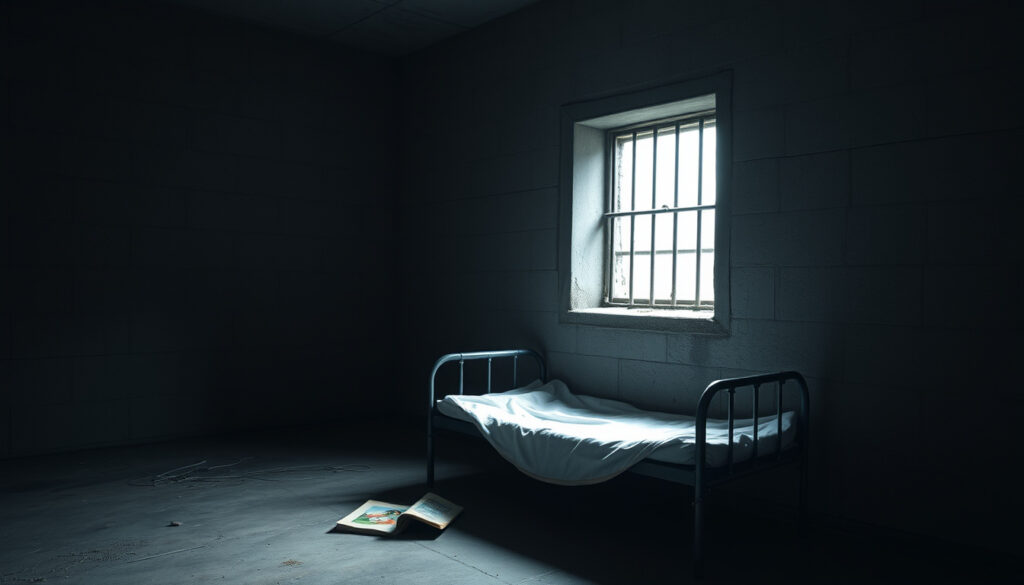
Maudsley is currently held at HM Prison Wakefield in West Yorkshire, where he has been in solitary confinement since 1983. After the 1974 killing, Maudsley was sent to Broadmoor Psychiatric Hospital, and after the later murders he was transferred to Wakefield Prison, where he killed again. By 1983, authorities deemed him too dangerous for a normal cell and built a special two-cell unit in the basement of Wakefield Prison; he has been kept in solitary confinement there for decades, with movement outside the cell reportedly requiring at least four officers.
Prison Conditions and Legal Status
Maudsley has complained publicly about the conditions, saying prison authorities had “put me into solitary confinement and throw away the key,” and a 2000 attempt to have the conditions relaxed was unsuccessful. The records also say he asked for a budgerigar and for permission to die by cyanide, and both requests were denied. On the legal side, the key point is that Maudsley received a life sentence with a whole life tariff, meaning he is not expected to be released.
Maudsley is serving a whole-life order, which means he will never be considered for parole. There is no possibility of release under current sentencing guidelines.
Timeline of Robert Maudsley’s Life and Crimes
- 1953: Robert John Maudsley born in Liverpool, England.
- Early 1960s: Reports of severe physical and emotional abuse by his father.
- 1974: First murder: John Farrell, a man who showed Maudsley photographs of child sex abuse. Maudsley sentenced to indefinite detention in Broadmoor Hospital.
- 1977: While in Broadmoor, Maudsley and another patient kill fellow inmate David Francis.
- 1978: Transferred to prison; kills two inmates, Salney Darwood and Bill Roberts, in a single day. He is convicted of two more murders and given a whole-life tariff.
- 1983: Moved to a purpose-built glass bulletproof cell in Wakefield prison due to violent behaviour.
- 2000s–2020s: Multiple documentaries and news features; remains in solitary confinement.
- 2020: Apple TV+ documentary ‘Making a Monster’ episode features Maudsley.
- 2025: Still incarcerated; periodic news updates about his conditions.
What Is Confirmed and What Remains Unclear?
| Established Information | Information That Remains Unclear |
|---|---|
| Maudsley killed four people. | The nickname ‘Hannibal the Cannibal’ is widely used but Maudsley denies cannibalistic acts; no forensic evidence confirms any cannibalism. |
| He has been in solitary confinement since 1983. | Some reports claim he ate part of a victim’s brain, but this is not verified and likely a prison myth. |
| He was abused as a child. | The exact number of years in solitary confinement varies by source (some say since 1979, others 1983). |
| He is serving a whole-life sentence with no chance of parole. | Maudsley’s mental health assessments and rehabilitation efforts are not fully public. |
What Is the Psychological and Legal Context of the Maudsley Case?
Maudsley’s case raises debates on the treatment of prisoners with severe mental illness, the effectiveness of solitary confinement, and the ethics of whole-life sentences. His childhood abuse is often cited as a contributing factor, but his actions after the first murder suggest a pattern of premeditated violence within institutions. The nickname ‘Hannibal the Cannibal’ has sensationalised his story, often overshadowing the nuance of his background. Documentaries like ‘Making a Monster’ attempt to explore his psychology but are limited by prison access. Public opinion is divided between seeing him as a monster or a victim of a failed system.
Sources and Key Quotes
“Robert John Maudsley (born 26 June 1953) is an English serial killer.”
“Robert Maudsley, currently locked away in solitary confinement as one of the longest serving prisoners in British history.”
– Crime & Investigation – Abused as a child, Robert Maudsley killed abusers as an adult
“Consultant psychiatrist Dr Bob Johnson worked closely with Robert Maudsley at Parkhurst prison…”
What Does the Maudsley Case Mean in a Broader Context?
The Maudsley case is a stark example of how childhood trauma can intersect with the criminal justice system. His victim pattern—targeting sexual offenders and child abusers—adds a layer of moral complexity that continues to fuel public debate. However, his crimes were still murders, and the legal system has responded with one of its harshest penalties: indefinite solitary confinement under a whole-life order. The case also highlights the challenges of managing violent offenders with severe psychological histories within the prison system. For more on this, read about Abused as a child, Robert Maudsley killed abusers as an adult.
Is Robert Maudsley still alive?
Yes, as of 2025, Robert Maudsley is alive and held in solitary confinement at HM Prison Wakefield.
Did Robert Maudsley eat his victims?
There is no confirmed evidence that Maudsley engaged in cannibalism. The nickname ‘Hannibal the Cannibal’ is a prison rumour that he denies.
How many people did Robert Maudsley kill?
He is known to have killed four people: one civilian and three fellow inmates.
Why was Robert Maudsley put in solitary confinement?
After killing two inmates in 1978, he was deemed too dangerous for general population and was placed in a custom-built glass and steel cell.
Will Robert Maudsley ever be released?
No. He was given a whole-life order, meaning he will never be considered for parole.
What is the Robert Maudsley documentary about?
The documentary ‘Making a Monster’ (2020, Apple TV+) features interviews with psychiatrists and experts exploring his psychology and background.
More related posts
 Miss Mary of Sweden – UK Stockists and Buying Guide
 Maisie Adams – Age, Husband, Height, Tour & Taskmaster Win
 Stud Earrings for Women – Material, Size & Budget Guide
 Jessica Pegula – Ranking, Net Worth, and Career Stats 2025
 B&Q Huddersfield – Hours, Services, Parking & Products
 Swing and Slide Set – Best 2025 Picks by Budget and Yard
 Word to PDF Converter – Best Free Tools and Guides
 Bayern vs SC Freiburg – Head-to-Head Stats and Match Results