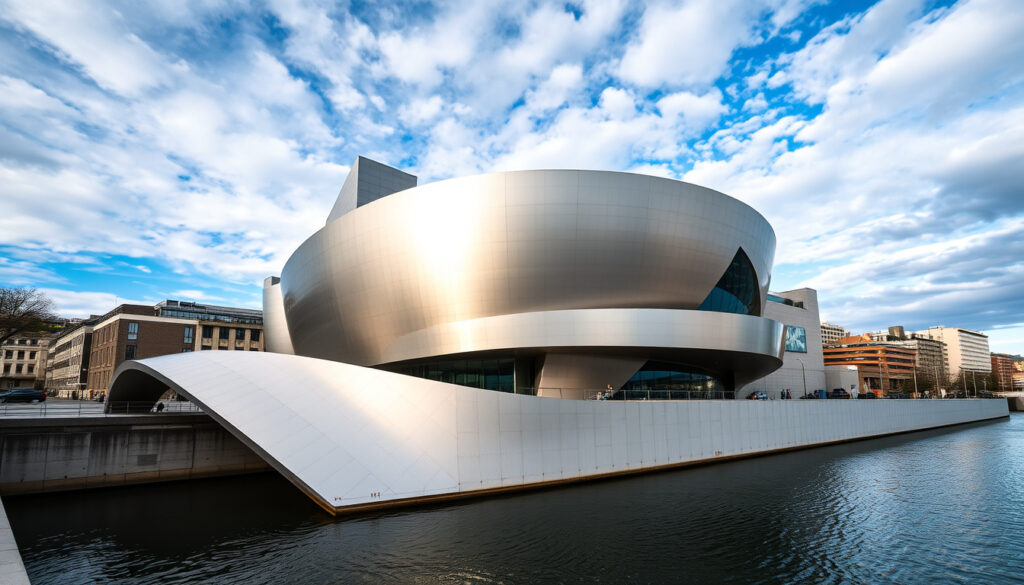
Frank Gehry – Architecture Style, Buildings, and Legacy
Frank Gehry, born Frank Owen Goldberg on February 28, 1929, in Toronto, Canada, was a Canadian-born architect who later became a naturalized American citizen. He is widely recognized for his highly sculptural and unconventional buildings that challenged traditional architectural norms. Gehry became a defining figure of deconstructivist architecture, a style characterized by fragmented forms and a departure from modernist principles. He passed away on December 5, 2025, in Santa Monica, California.
From his early days in Los Angeles to his status as a global icon, Gehry’s career spanned over six decades. His work, often described as both postmodern and sculptural, reshaped city skylines and influenced a generation of architects. This article explores his architectural philosophy, his most famous projects, and the personal details of his long and productive life.
What is Frank Gehry’s Architectural Style?
Gehry’s architectural style is most frequently described as postmodern and deconstructivist, though he reportedly resisted being confined to a single category. His work is defined by unconventional forms and dynamic compositions that appear fluid, twisting, or sculptural. He broke with modernist rules, particularly the idea that form should strictly follow function, instead creating buildings that are as much works of art as they are functional spaces.
- Frank Gehry pioneered deconstructivist architecture using commercial materials like chain-link fence and corrugated metal.
- His first major international breakthrough was the Guggenheim Museum Bilbao (1997), which sparked the ‘Bilbao Effect’.
- Gehry often pushes boundaries with unconventional forms, using computer-aided design (CATIA) originally developed for aerospace.
- Beyond buildings, he has designed furniture, jewelry, and a sailboat, showing his versatility.
- His work is associated with everyday or industrial materials like chain-link fencing, plywood, and corrugated steel, alongside more expressive cladding such as titanium.
| Attribute | Detail |
|---|---|
| Born | February 28, 1929 |
| Nationality | Canadian-American |
| Practice | Gehry Partners, LLP (founded 1962) |
| Notable Awards | Pritzker Prize (1989), AIA Gold Medal (1999) |
| Famous Buildings | Guggenheim Bilbao, Walt Disney Concert Hall, Louis Vuitton Foundation, Experience Music Project |
What materials does Frank Gehry use?
Gehry is known for his inventive use of materials. Early in his career, he favored inexpensive, industrial materials such as chain-link fencing, plywood, and corrugated steel, which he used to create fragmented, collaged forms. Later, his work became synonymous with sculptural metallic skins, most notably titanium, which gives many of his famous buildings their shimmering, fluid appearance.
How did Frank Gehry start his career?
After moving to Los Angeles with his family in 1947, Gehry studied architecture at the University of Southern California. He also briefly studied urban planning at Harvard and worked for a year in Paris. He opened his own office in Santa Monica in 1962, after working at firms such as Victor Gruen Associates and Pereira and Luckman Associates. His early residential work, including the remodeling of his own Santa Monica house, signaled the break that led to his signature style.
What Are the Most Famous Frank Gehry Buildings?
Frank Gehry’s portfolio includes some of the most recognizable and celebrated buildings of the modern era. The following structures are consistently identified by sources as his most important and influential works.
- Guggenheim Museum Bilbao in Spain. The museum’s opening in 1997 was a watershed moment, transforming the city’s economy and tourism and giving rise to the concept of ‘iconic architecture as economic catalyst’.
- Walt Disney Concert Hall in Los Angeles. A masterpiece of sculptural form and acoustics, it has become a landmark of the city’s cultural landscape.
- Fondation Louis Vuitton in Paris. A striking glass-and-sail-like structure that serves as a private art museum and cultural center.
- 8 Spruce Street in New York. A residential skyscraper known for its dramatic, wave-like façade.
- Jay Pritzker Pavilion in Chicago. An outdoor bandshell in Millennium Park featuring a dramatic, billowing stainless steel headdress.
- Biomuseo in Panama City. A colorful museum dedicated to biodiversity, located on the Amador Causeway.
- Santa Monica Residence. Gehry’s own home, remodeled in the 1970s, is historically important as it signaled the break from modernist conventions that would define his career.
What is the Guggenheim Museum Bilbao?
The Guggenheim Museum Bilbao is widely considered Gehry’s masterpiece. The building’s flowing, titanium-clad forms were revolutionary. Its success not only revitalized the city of Bilbao but also became a global model for how architecture can drive economic and cultural development, a phenomenon known as the “Bilbao Effect.”
What did Frank Gehry design for Louis Vuitton?
Gehry designed the Fondation Louis Vuitton in Paris. The building is a dramatic structure made of glass and metal, intended to resemble a ship with billowing sails. It was inaugurated in 2014 and houses the LVMH集团的 contemporary art collection.
The Guggenheim Bilbao is considered a moment in architectural history. It transformed Gehry from a celebrated architect into a household name and demonstrated the power of iconic architecture to revitalize a city’s economy and global image.
Who Are Frank Gehry’s Children and What Is His Net Worth?
While Frank Gehry’s architectural legacy is well-documented, details about his family and personal finances are more limited in the available sources. The sources confirm that he moved to Los Angeles with his family in 1947 and was born to Polish-Jewish parents. It is also noted that he changed his surname from Goldberg to Gehry in part to avoid antisemitism.
What is Frank Gehry’s net worth?
The available research material does not include a reliable, sourced figure for Frank Gehry’s net worth. Various unverified estimates circulate online, but no credible or confirmed number can be provided from authoritative sources.
There is no verified figure for Frank Gehry’s net worth in the provided research. Exact financial details remain private, and any specific numbers found online should be treated with caution.
Is There a Frank Gehry Book?
Yes, a definitive biography of the architect was published: Frank Gehry: The Biography by Paul Goldberger. The book provides an in-depth look at Gehry’s life, his creative process, and his impact on architecture and culture. It is considered a key resource for anyone wanting to understand the man behind the buildings.
Frank Gehry Timeline
- 1929: Born in Toronto, Canada
- 1954: Graduates from USC School of Architecture
- 1962: Establishes Frank Gehry & Associates
- 1989: Wins Pritzker Architecture Prize
- 1997: Guggenheim Museum Bilbao opens
- 2003: Walt Disney Concert Hall opens
- 2014: Louis Vuitton Foundation opens
- 2025: Passes away on December 5 in Santa Monica
What Is Certain and Uncertain About Frank Gehry?
| Established Information | Information That Remains Unclear |
|---|---|
| Frank Gehry was a real person and a highly influential architect. | His exact net worth is not publicly verified and remains private. |
| He was born on February 28, 1929, in Toronto. | Specific details about his children and immediate family are not detailed in the provided sources. |
| He died on December 5, 2025, in Santa Monica, California. | The full extent of his design philosophy and all his influences is a matter of scholarly interpretation. |
| He won the Pritzker Prize in 1989 and designed the Guggenheim Bilbao. | The complete list of all projects he was working on at the time of his death is not available in the provided research. |
What Is the Context and Impact of Frank Gehry’s Work?
Frank Gehry is widely regarded as one of the most important architects of the late 20th and early 21st centuries. His style, often associated with deconstructivism, challenges traditional architectural norms through fragmented forms and unexpected materials. Some critics have argued that his designs prioritize spectacle over function or sustainability, but Gehry responded that his buildings are deeply contextual and efficient.
What Do the Sources and Critics Say About Him?
“Architecture should speak of its time and place, but yearn for timelessness.”
Frank Gehry, quote widely attributed
“The Guggenheim Bilbao is a moment in architectural history.”
Architectural Digest
“He brought a new sculptural language to architecture.”
Pritzker Prize jury citation (1989)
Summary: Who Was Frank Gehry?
Frank Gehry was a visionary architect whose sculptural and deconstructivist style left an indelible mark on the world. From his early experiments with industrial materials to the global triumph of the Guggenheim Bilbao, his work redefined what architecture could be. He continued to design well into his later years, passing away in 2025 and leaving behind a legacy of iconic buildings that will be studied and admired for generations. For a look at another creative figure in the arts, you might read the Nick Cave – Biography, Music, Art, and Family.
Frequently Asked Questions About Frank Gehry
Is Frank Gehry still alive?
No, Frank Gehry passed away on December 5, 2025, in Santa Monica, California.
What materials does Frank Gehry use?
He often uses titanium, stainless steel, chain-link fencing, plywood, and corrugated metal in his designs.
Where does Frank Gehry live?
He owned a house in Santa Monica, California, which he famously remodeled in the 1970s. This house is considered a historic landmark of his early style.
How did Frank Gehry start his career?
He studied architecture at the University of Southern California and opened his own practice in Santa Monica in 1962.
What is Frank Gehry’s most famous building?
The Guggenheim Museum Bilbao in Spain is universally considered his most famous and influential work.
Did Frank Gehry change his name?
Yes, he was born Frank Owen Goldberg and changed his surname to Gehry in 1954.
What is the Frank Gehry book?
Frank Gehry: The Biography by Paul Goldberger is a definitive book about his life and career.
What is the ‘Bilbao Effect’?
It refers to the economic and cultural revitalization of the city of Bilbao following the construction of the Guggenheim Museum.
What awards did Frank Gehry win?
He won the Pritzker Architecture Prize in 1989 and the AIA Gold Medal in 1999.
Who are Frank Gehry’s children?
The provided research material does not contain specific details about his children.
More related posts
 Jutta Leerdam – Age, Height, Net Worth and Olympic Gold
 Jamie Vardy – Net Worth, Age, Career Stats and 2025 Update
 Joe Gilgun – Biography, Career and Personal Life 2025-2026
 Harrison Sullivan – Age, net worth, and legal case facts
 Air Conditioning Unit Portable – Best 2025 Models
 Childish Gambino – Real Name, Age, Net Worth, and More
 Angelica Bell – Biography, Husband, Children and Net Worth
 Nathan Braniff – Biography, Blue Lights Role & Personal Life