Orson Welles – Biography, Death, Movies and Lasting Legacy
Orson Welles remains one of the most towering figures in film history. Born in 1915, he was a prodigy who directed, wrote, and starred in Citizen Kane at just 25 years old, a film that continues to top critics’ lists as the greatest ever made. His life was a tapestry of groundbreaking artistic achievements, public controversies, and a legacy that only grew after his death.
Welles was more than a filmmaker; he was a magician, a radio pioneer, and a Shakespearean actor who reshaped how stories are told on screen. From the panic caused by his War of the Worlds broadcast to his later years voicing a giant robot in Transformers, his career spanned decades and defied easy categorization. This article explores his biography, his most famous movies, the facts surrounding his death, and the enduring trivia that keeps his name alive.
Who Was Orson Welles? The Life of a Cinematic Pioneer
George Orson Welles was born on May 6, 1915, in Kenosha, Wisconsin. His mother, Beatrice Ives Welles, was a concert pianist, and his father, Richard Head Welles, was an inventor. From an early age, Welles showed remarkable talent in magic, piano, and painting. He also suffered from asthma and chronic sinus headaches, issues linked to congenital spinal anomalies that would trouble him throughout his life.
Innovator behind Citizen Kane, War of the Worlds, Touch of Evil
1938 War of the Worlds broadcast caused nationwide panic
Died of heart attack in 1985; surrounded by myths
Voiced Unicron in Transformers; famous for cape and Rosebud
- Orson Welles is widely regarded as one of the greatest filmmakers of the 20th century, despite a tumultuous career.
- Citizen Kane remains a benchmark for cinematic innovation, especially in narrative structure and deep focus cinematography.
- The 1938 War of the Worlds broadcast exemplifies the power of mass media and is still studied for its psychological impact.
- Many myths surround Welles’ death and personal habits; official cause of death was a heart attack.
- His later years included voice work for Transformers and a famous series of wine commercials.
| Fact | Detail |
|---|---|
| Full Name | George Orson Welles |
| Born | May 6, 1915, Kenosha, Wisconsin, USA |
| Died | October 10, 1985, Los Angeles, California, USA |
| Cause of Death | Heart attack (acute myocardial infarction) |
| Occupation | Actor, director, writer, producer |
| Notable Works | Citizen Kane, The War of the Worlds (radio), Touch of Evil, The Stranger |
| Spouse(s) | Virginia Nicolson, Rita Hayworth, Paola Mori |
| Awards | Honorary Academy Award, Palme d’Or, Grammy for Best Spoken Word |
When Welles was nine, his mother died, and his father followed when he was 15, leaving him an orphan. He traveled the world before becoming the ward of Dr. Maurice Bernstein. His career began on stage, making his New York debut in 1934. Recommendations from George Lucas and Alexander Woollcott opened doors to Katharine Cornell’s theater company, setting the stage for his meteoric rise.
What Are Orson Welles’ Most Famous Movies?
Citizen Kane (1941)
Welles wrote, directed, produced, and starred in this film. Initially a commercial failure that lost RKO $150,000, Citizen Kane is now regarded by many critics as the best movie ever made. Its innovative use of deep focus photography, non-linear storytelling, and a fragmented narrative structure fundamentally changed cinema.
The War of the Worlds (1938)
On October 30, 1938, Welles directed The Mercury Theatre of the Air and broadcast an adaptation of H.G. Wells’ The War of the Worlds. The realistic news bulletin format created national panic, with listeners believing Martians had landed in New Jersey. The broadcast remains a landmark in radio history and is still studied for its psychological and media impact.
Touch of Evil (1958)
Considered one of Welles’ finest later works, Touch of Evil is a noir thriller known for its dazzling camera work and themes of guilt. It failed in the US initially but gained a strong reputation over time, now celebrated for its opening tracking shot and complex moral narrative.
The Lady from Shanghai (1947)
This noir thriller, starring Rita Hayworth, is famous for its surreal climax in a hall of mirrors. Welles wrote, directed, and starred in it, though the studio heavily re-edited his original cut.
Other Notable Films
- Chimes at Midnight (1965) – A Shakespearean adaptation often cited among his best.
- Othello (1955) – Won the Palme d’Or at the Cannes Film Festival.
- Mr. Arkadin (1955) – A complex film made while Welles was living in Europe.
- Macbeth (1948) – A bold, low-budget Shakespeare adaptation.
- The Stranger (1946) – A more conventional film, but one of his few commercial successes.
Welles left behind a large number of unfinished film projects, most notably The Other Side of the Wind, which was finally completed and released in 2018 by Netflix. This reflects his lifelong struggle with studio financing and editing control.
How Did Orson Welles Die? The Cause of Death Explained
On October 9, 1985, Welles recorded his final interview on The Merv Griffin Show. He returned to his Hollywood home and worked into the early morning of October 10, typing stage directions for Orson Welles’ Magic Show. He suffered a heart attack and was found by his chauffeur around 10 a.m. The official cause of death was acute myocardial infarction, confirmed by the coroner.
In 1987, his ashes were taken to Spain and buried in an old well on the Ronda estate of his friend, bullfighter Antonio Ordóñez. This unusual final resting place is a nod to his deep connection with Spanish culture and his love for the country where he spent his final years.
The Mystery of Rosebud and Other Orson Welles Trivia
What is the meaning of ‘Rosebud’?
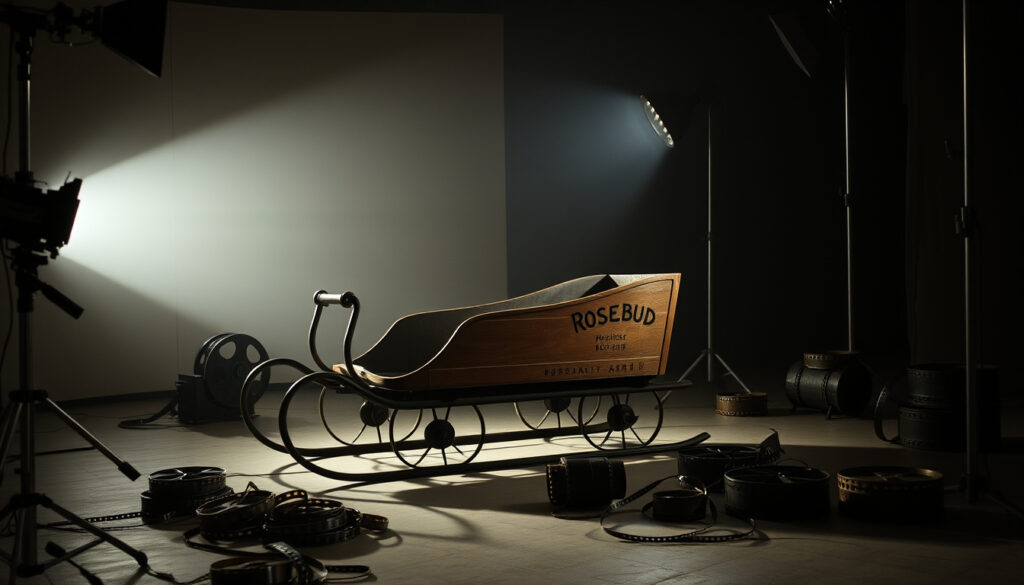
The word “Rosebud” is the final utterance of Charles Foster Kane in Citizen Kane. It remains one of cinema’s most famous MacGuffins. Welles never explicitly confirmed its meaning, but it is widely interpreted as a symbol of lost innocence or the unattainable simplicity of childhood. The term is derived from the name of a sled from Kane’s youth, a metaphor for the emotional void left by his mother’s departure.
Why did Orson Welles wear a cape?
Welles was frequently seen in a cape, which became a signature part of his public persona. Some sources suggest he used it for dramatic effect, while others link it to his chronic back pain. Rumors that he wore it to conceal a health condition or to project an imposing silhouette remain unconfirmed.
Did Orson Welles appear in Transformers?
Yes. Welles provided the voice for Unicron, a planet-sized robot, in the 1986 animated film Transformers: The Movie. This role is often cited as a surprising late-career credit, and Welles reportedly described the character as “a giant mechanical thing” in his final interview.
Claims linking Orson Welles to the Shakespeare authorship controversy (via the De Vere Society) are speculative and rejected by mainstream scholarship. Fringe theories suggest Welles may have had knowledge of Shakespeare’s true identity, but no credible evidence supports these claims. Welles’ own work as a Shakespearean director remains his primary connection to the Bard.
Timeline: Key Events in Orson Welles’ Life
- : Born in Kenosha, Wisconsin.
- : Co-founded the Mercury Theatre on Broadway.
- : The War of the Worlds radio broadcast caused national panic.
- : Released Citizen Kane, nominated for multiple Oscars.
- : Released The Magnificent Ambersons, which was heavily re-edited by RKO.
- : Released The Lady from Shanghai.
- : Released Touch of Evil.
- : Released Chimes at Midnight, a critical favorite.
- : Received an Honorary Academy Award for lifetime achievement.
- : Died of a heart attack at age 70.
What Is Certain and What Remains Unclear?
| Established Information | Information That Remains Unclear |
|---|---|
| Born May 6, 1915; died October 10, 1985. | The exact meaning of “Rosebud” is metaphoric; Welles never explicitly confirmed. |
| Citizen Kane was directed by and starred Orson Welles. | Claims linking him to Shakespeare authorship (De Vere Society) are speculative. |
| Cause of death was a heart attack, confirmed by coroner. | Rumors about his cape being for a specific health condition are unconfirmed. |
| He voiced Unicron in Transformers: The Movie (1986). | The full extent of his unproduced screenplays is unknown. |
The Context of Orson Welles’ Career
Welles’ career was marked by early genius and later struggles with studio interference. After Citizen Kane, he spent decades in Europe, making films on tight budgets and often unable to control final cuts. His reputation as a visionary filmmaker steadily climbed after the 1970s, especially as younger directors like Jim Morrison cited him as an influence.
The rise of streaming has renewed interest in his filmography. Many of his films are available on the Criterion Channel and other platforms, allowing new audiences to discover his pioneering work in deep focus photography, mirrored compositions, and non-linear narratives.
Sources and Notable Quotes
“A film is never really good unless the camera is an eye in the head of a poet.”
— Orson Welles
“Citizen Kane is one of the most important films ever made.”
— Roger Ebert
Primary sources for this article include Wikipedia, Britannica, and IMDb. The Library of Congress holds the archive of the 1938 War of the Worlds broadcast, and the Criterion Collection offers restored editions of his major films.
Summary
Orson Welles remains a central figure in film history, known for his distinctive voice, towering presence, and groundbreaking artistic contributions. His work in Citizen Kane fundamentally changed film narrative structure and continues to influence directors today. Despite a career filled with commercial failures and studio battles, his legacy as a visionary filmmaker is secure.
Frequently Asked Questions
What was Orson Welles’ net worth?
At death, his estate was estimated at around $1 million (adjusted for inflation).
How tall was Orson Welles?
He was approximately 5’11” (180 cm).
Did Orson Welles write a book?
Yes, he wrote This is Orson Welles (interviews) and contributed to many other works.
What is ‘Me and Orson Welles’?
A 2008 film about a teen who works with Welles in a 1937 theater production.
Why is the De Vere Society interested in Orson Welles?
A fringe theory suggests Welles may have had knowledge of Shakespeare’s true identity, but it lacks evidence.
Was Orson Welles in Transformers?
Yes, he voiced Unicron, the planet-eating robot in the 1986 animated film.
What is the meaning of ‘Rosebud’?
It is widely interpreted as a symbol of lost innocence or the unattainable simplicity of childhood, but Welles never confirmed its meaning.
Did Orson Welles win an Oscar?
He received an Honorary Academy Award in 1971, and his film Citizen Kane won Best Original Screenplay.
Where is Orson Welles buried?
His ashes were buried in an old well on the Ronda estate of bullfighter Antonio Ordóñez in Spain.
What was Orson Welles’ cause of death?
He died of a heart attack (acute myocardial infarction) on October 10, 1985.
More related posts
 UEFA Nations League Brackets – 2024/25 Groups Fixtures Results
 Stainless Steel Water Bottle – Best 2025 Models Tested
 Prince Harry Duke Sussex – Full Biography and Latest News
 King Harold – The True Story of England’s Last Anglo-Saxon King
 Ellie Simmonds – Biography, Medals, and Strictly Journey
 Nottingham Forest vs Arsenal F.C. Timeline – Head-to-Head Record and Results
 Hop on Hop Off Edinburgh – Routes Prices and Timetables
 Rute Cardoso – Age, Husband, Family and Biography