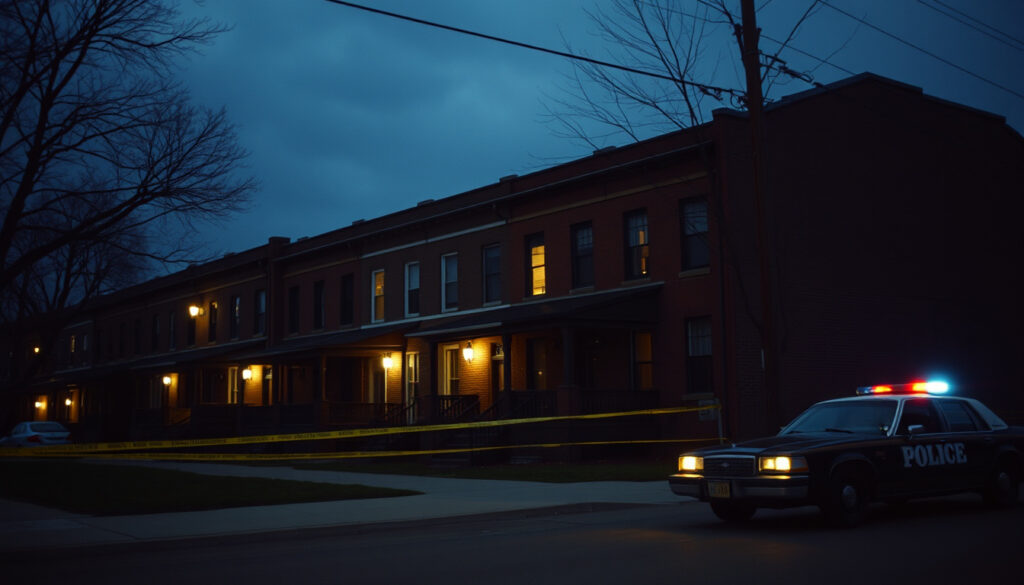
Richard Speck – Inside the 1966 Chicago Nurse Murders
On the night of July 14, 1966, eight student nurses were murdered in a Chicago townhouse. The man responsible, Richard Speck, became one of the most infamous criminals in American history. His case remains a grim milestone in the annals of violent crime.
Speck’s attack shocked the nation and led to lasting changes in security protocols at medical dormitories. The brutality of the killings, the lone survivor’s testimony, and a later prison video confession have kept public interest alive for decades.
This article examines the facts of the case, the man behind the crimes, and the questions that still surround the events.
Who Was Richard Speck?
| Victims | 8 student nurses |
| Date | July 14, 1966 |
| Location | South Deering, Chicago, Illinois |
| Verdict | Guilty, sentenced to 400–1200 years (no death penalty) |
- Richard Speck killed eight student nurses in one night, making him one of the most notorious mass murderers in U.S. history.
- Speck was captured after a suicide attempt and later confessed, but a controversial prison video showed him bragging about the crimes.
- He was sentenced to 400–1200 years and died in prison of a heart attack in 1991, one day before his 50th birthday.
- The case led to changes in security at nursing dormitories and influenced public fear of random violence.
- Speck’s video confession later became evidence in debates about parole and prison privileges.
| Category | Detail |
|---|---|
| Full Name | Richard Benjamin Speck |
| Born | December 6, 1941, Chicago, Illinois |
| Died | December 5, 1991 (age 49), Joliet, Illinois |
| Crime | Mass murder of 8 student nurses |
| Date of Crime | July 14, 1966 |
| Location | 2319 East 100th Street, Chicago (now demolished) |
| Arrest | July 16, 1966 (attempted suicide found) |
| Trial | April 1967; guilty on all counts |
| Sentence | 8 concurrent sentences of 50–150 years (400–1200 years total) |
| Cause of Death | Heart attack (myocardial infarction) |
| Burial | Unknown or unmarked grave (family did not claim body) |
| Media | Infamous prison video recorded in 1988, aired 1996 |
Richard Speck’s Early Life and Family
Richard Benjamin Speck was born on December 6, 1941, in Chicago. By the age of 24 he had accumulated 42 arrests, including multiple assaults. He worked intermittently as a merchant seaman and was described as a “third-rate burglar” looking for an easy score.
His childhood was troubled. Speck grew up in a violent and unstable household, and his relationship with his mother would later be cited by psychiatrists as a factor in his psychological makeup.
Was Richard Speck a Serial Killer?
Speck is typically classified as a mass murderer rather than a serial killer because all his murders occurred in a single event. The distinction matters in criminology: serial killers commit separate homicides over time, while mass murderers kill multiple people in a short period. Speck’s attack lasted several hours, but it was one continuous spree.
How Did Richard Speck Commit the Murders?
The Night of the Murders: July 14, 1966
At 11 p.m. on July 13, 1966, Speck broke into a townhouse at 2319 E. 100th St. in Chicago’s Jefferson Manor neighborhood. The building served as a dormitory for student nurses from South Chicago Community Hospital. Over the next several hours he systematically bound, stabbed, strangled, and slashed the throats of eight women. One victim, Gloria Davy, was raped before being killed.
The sole survivor, Corazon Amurao, hid under a bed and counted the victims. She later became the prosecution’s star witness during the trial. Her eyewitness account was crucial in securing a conviction.
The Victims: Eight Student Nurses
The eight women were all student nurses at South Chicago Community Hospital. Their names were Pamela Wilkening, Patricia Matusek, Mary Ann Jordan, Merlita Gargullo, Suzanne Farris, Gloria Davy, Nina Schmale, and Valentina Pasion. Corazon Amurao survived by remaining silent and still under a bed while Speck searched the room.
How Speck Gained Entry and His Method
Speck entered through a window or a door left unlocked. He used a knife and possibly other weapons, and his method combined stabbing, strangulation, and throat slashing. The brutality suggested a high level of rage and sadism.
What Happened to Richard Speck After the Murders?
Arrest and Trial
Speck was arrested on July 16, 1966, after a failed suicide attempt in a seedy hotel. His trial began in April 1967 in Peoria, Illinois, after the venue was moved from Cook County to avoid bias. The prosecution presented overwhelming evidence: fingerprints from the scene, testimony from Amurao, and a jailhouse confession recorded while Speck was sedated.
Sentence and Prison Life
On June 5, 1967, Judge Herbert C. Paschen sentenced Speck to death by electric chair. The sentence was immediately stayed pending appeal. In 1972 his death penalty was commuted to life imprisonment, and he was ordered to serve 400 to 1,200 years through eight consecutive sentences.
Did Richard Speck Receive the Death Penalty?
Yes, he was initially sentenced to death. However, in 1972 his sentence was commuted to life in prison. Speck ultimately died of a heart attack on December 5, 1991, while incarcerated at Stateville Correctional Center, one day before his 50th birthday.
What Was the Richard Speck Prison Video?
Content of the Videotape
A grainy jailhouse videotape from 1988 shows Speck speaking casually about the murders. He is seen laughing and describing the experience as “having a ball.” He admits that he killed the nurses to “kill off all the witnesses” and says, “Sure I did,” when asked if he committed the crimes.
Despite the video, Speck had previously told authorities he had no recollection of the murders, claiming he was heavily sedated. The footage contradicted that assertion and showed a man who appeared fully conscious of his actions.
Discovery and Public Reaction
The video was discovered by prison authorities in 1988 and later aired publicly by CBS News in 1996. It caused public outrage because it showed Speck bragging about the murders apparently while under the influence of drugs obtained inside prison. The controversy raised questions about prison discipline and the treatment of high-profile inmates.
Why Did Richard Speck Kill?
Psychological Profile and Mental State
Psychiatrists who evaluated Speck described his behavior as stemming from a “Madonna-prostitute complex.” He revered women he viewed as “Madonnas” but wanted to destroy those he saw as “prostitutes,” a feeling linked to his relationship with his mother. Evaluators noted classic signs of antisocial personality disorder.
Substance Abuse and Violent History
Speck claimed he was on LSD (acid) on the night of the murders. He said the violence escalated after a victim spat on him and threatened to identify him in a lineup. His long criminal record, which included 42 arrests by age 24, shows a pattern of violence and instability.
Some experts point to sadism as the primary motive. Others emphasize the role of drugs and alcohol. Still others believe rage against women, particularly those he considered promiscuous, was the driving factor. No single explanation has been universally accepted.
When Did the Key Events in the Speck Case Occur?
- : Richard Benjamin Speck born in Chicago.
- : Speck enters the nurses’ dormitory and kills eight women; one survivor hides under a bed.
- : Speck found after suicide attempt; arrested.
- : Trial; found guilty and sentenced to death (later commuted to 400–1200 years).
- : Death sentence commuted to life imprisonment.
- : Prison video recorded showing Speck bragging about the murders.
- : Speck dies of heart attack in prison.
- : CBS News airs portions of the prison video.
What Do We Know for Certain and What Remains Unclear?
| Established information | Information that remains unclear |
|---|---|
| Speck killed eight nurses on July 14, 1966. | Exact motive remains debated: some cite psychopathy, others point to alcohol/drugs or rage against women. |
| He was convicted and sentenced to 400–1200 years. | Whether Speck’s death sentence was commuted due to a Supreme Court ruling – in fact, Speck’s trial pre-dated that ruling but Illinois had not executed anyone since 1962. |
| He died in prison of a heart attack in 1991. | The full video has never been publicly released; only excerpts have been broadcast. |
| A prison video exists showing Speck talking about the crimes. | Location of Speck’s final burial site is unconfirmed; some sources say a potter’s field, others a family plot in Michigan. |
What Broader Context Surrounded the Speck Murders?
The murders occurred during a period of rising public fear about violent crime in the United States. Speck’s crime shocked the nation and intensified debates about the death penalty. The later prison video controversy raised questions about the treatment of high-profile inmates and the erosion of deterrence. Psychologists have analyzed Speck as a classic psychopath with antisocial personality disorder, though his history of substance abuse and childhood trauma also played roles. The 1960s Chicago crime wave provided a backdrop of urban tension and changing social norms.
What Did Speck and Others Say About the Murders?
“I had no feeling. I just killed them. They didn’t bother me. I just killed them.”
Richard Speck, from prison video (1988), as reported by CBS News (1996)
“This was the first mass murder in the modern sense – a stranger killing multiple people at random.”
Chicago History Museum blog, July 2023
“He was a low-life, a hustler, a thief, and a murderer.”
Dr. James O. Holifield, forensic psychiatrist who evaluated Speck, as cited in BBC documentary
What Is the Legacy of the Richard Speck Case?
The case remains one of the most heinous crimes in Chicago history. The surviving victim, Corazon Amurao, eventually gave her first major interview decades after Speck’s death. Further archival releases of the prison video may occur as public records requests persist. Continued historical analysis may uncover new details from witness accounts or police files. Discussions about prison reform and media ethics often cite Speck’s video as a key example.
Frequently Asked Questions
How many nurses did Richard Speck kill?
Eight student nurses. One survivor escaped by hiding under a bed.
Where did the murders happen?
At a townhouse used as a dormitory for student nurses at 2319 East 100th Street in the South Deering neighborhood of Chicago, Illinois.
Was Richard Speck executed?
No. He was sentenced to 400–1200 years in prison and died of a heart attack in 1991.
Did Richard Speck confess?
Yes, he initially confessed to police and later in a prison video.
Where is Richard Speck buried?
His body was not claimed by family; he was reportedly buried in an unmarked grave at a potter’s field in Illinois.
Why is the prison video controversial?
It shows Speck laughing and bragging about the murders while apparently high on drugs, raising questions about prison discipline and the inmate’s access to drugs.
More related posts
 Dylan O’Brien – His Movies, Accident and Personal Life 2025
 How to Make Crepes – Step-by-Step Guide With Tips
 Dewey Malcolm in the Middle – Recast for 2026 Revival Explained
 Liverpool Water Street Incident – Key Fact & Late t Update
 Arthur Conan Doyle – The Doctor Who Created Sherlock Holmes
 Joe Gilgun – Biography, Career and Personal Life 2025-2026
 Canada Goose – Pricing, Outlets and Fur Parkas Guide
 Felicity Jones – From Theory of Everything to The Brutalist