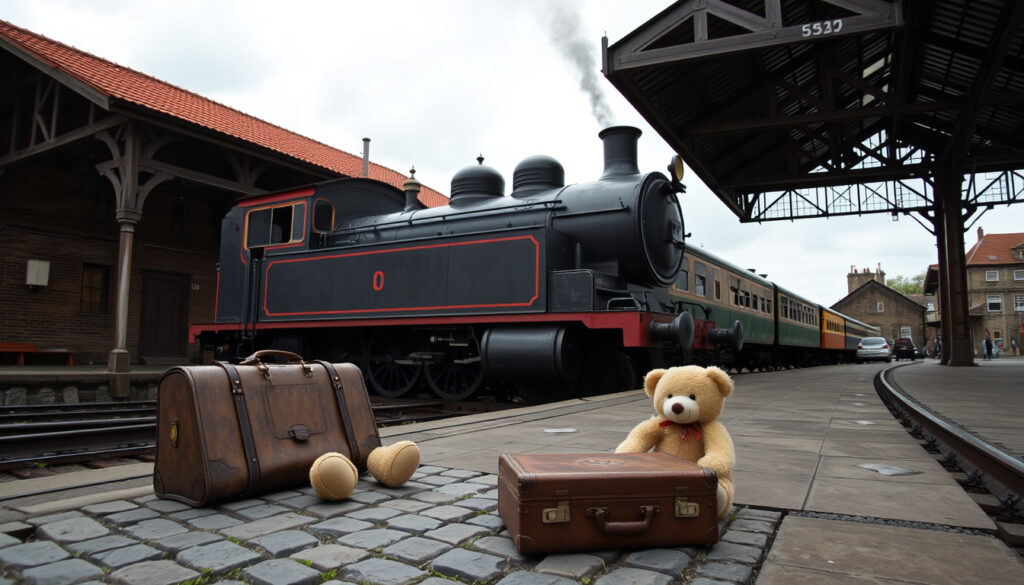
Nicholas Winton – The Man Who Saved 669 Children
Sir Nicholas Winton was a British stockbroker and humanitarian who organized the rescue of 669 children, most of them Jewish, from Nazi-occupied Czechoslovakia in 1939. His story remained largely unknown for nearly five decades until a chance discovery brought it to light.
Born in London to parents of German-Jewish descent, Winton grew up in comfortable circumstances. He worked as a stockbroker in the City of London and had no direct connection to the growing crisis in Central Europe. Yet in December 1938, a friend’s invitation to visit Prague changed the course of his life and the lives of hundreds of families.
What he found there shocked him. Thousands of refugees, many of them children, were living in desperate conditions. The Nazi occupation of Czechoslovakia was imminent, and the window for escape was closing fast. Winton decided to act.
Who Was Nicholas Winton?
Who
British stockbroker and humanitarian (1909–2015)
What
Organized the rescue of 669 mostly Jewish children from Nazi-occupied Czechoslovakia
When
9 months in 1939, just before WWII began
Legacy
Knighted, known as ‘Britain’s Schindler’; story revealed in 1988 via a BBC program
Key Insights About Nicholas Winton
- Winton’s rescue was almost entirely self-funded and organized with a small team, including his mother.
- He never spoke about his actions until his wife found a scrapbook in 1988, leading to public recognition.
- The exact number of rescued children is often cited as 669, but the total may be higher due to undocumented cases.
- Winton lived to be 106 years old, receiving numerous honors late in life.
- He was knighted in 2003 by Queen Elizabeth II for his humanitarian work.
- His story has been compared to that of Oskar Schindler, earning him the nickname “Britain’s Schindler.”
- The 2023 biopic One Life introduced his story to a new global audience.
Key Facts About Sir Nicholas Winton
| Fact | Detail |
|---|---|
| Full Name | Sir Nicholas George Winton (born Wertheim) |
| Born | 19 May 1909, Hampstead, London |
| Died | 1 July 2015 (aged 106), Slough, England |
| Cause of Death | Heart failure (natural causes) |
| Spouse | Grete Winton (married 1948–1999) |
| Children | Three (including Barbara Winton, author) |
| Number of Children Rescued | 669 (exact number debated) |
| Main Rescue Route | Prague → London via train, then foster families |
| Key Recognition | Knighted in 2003; Czech Order of the White Lion |
How Many Children Did Nicholas Winton Save?
The widely accepted figure is 669 children. Most sources, including the United States Holocaust Memorial Museum, the Holocaust Memorial Day Trust, and Winton’s own records, converge on this number. Some historians note that a few additional children may have been saved through parallel arrangements, but 669 remains the standard figure.
How Did the Rescue Operation Work?
Winton set up a small office in a hotel room in Prague. He and a handful of volunteers, including his mother, processed applications from families desperate to send their children to safety. They organized transport by train from Prague to London, where foster families were arranged in advance. The entire operation ran for about nine months in 1939.
What Was the Kindertransport and Winton’s Role?
The Kindertransport was a British-backed rescue effort that brought about 10,000 children, mostly Jewish, from Nazi-occupied Europe to the United Kingdom. Winton’s operation was the largest single-source rescue from Czechoslovakia. While he worked within the broader Kindertransport framework, his initiative was independent and largely self-funded.
Which Children Were Rescued and Where Did They Go?
The children were mostly Jewish, though not exclusively. They came from Czechoslovakia, with many from Prague and surrounding areas. Once in London, they were placed with foster families across the United Kingdom. Most settled permanently in Britain, and their descendants now number in the thousands.
Winton’s operation was part of the broader Kindertransport movement that saved about 10,000 children. His was the largest single-source rescue from Czechoslovakia. The last train, carrying 241 children, departed Prague on 1 July 1939. A further train scheduled for September was stopped after the outbreak of war, and those children were not saved.
Nicholas Winton’s Personal Life: Wife, Death, and Cause of Death
Who Was Nicholas Winton’s Wife?
After the war, Winton joined the International Bank in Paris. There he met Grete Gjelstrup, a Danish woman. They married in 1948 and remained together until her death in 1999.
Did Nicholas Winton Have Children?
Winton and his wife had three children. One son, Robin, died in childhood. Winton is buried alongside his wife and son. His daughter Barbara Winton later wrote his biography, One Life: The True Story of Sir Nicholas Winton and the Prague Kindertransport.
When and How Did Nicholas Winton Die?
Winton died on 1 July 2015 at the age of 106. He had been admitted to hospital about a week earlier after a deterioration in his health. The cause of death was reported as cardiac arrest, or heart attack (myocardial infarction). His death was widely covered by outlets including the BBC and The Guardian, which emphasized his role in rescuing children from Nazi persecution.
Movies, Books, and Documentaries About Nicholas Winton
Is There a Movie About Nicholas Winton?
Yes. The feature film One Life, based on Barbara Winton’s biography, was released in 2023. It stars Anthony Hopkins as the older Winton and tells the story of the rescue and its later rediscovery. The film is promoted on Winton’s official site.
Where Can I Watch the Nicholas Winton Documentary?
Several documentaries cover Winton’s story. The most famous is the 1988 episode of the BBC program “That’s Life!” in which Winton was surprised to find himself in the audience as his rescue work was revealed. That clip remains widely available on platforms like YouTube. The 2023 film One Life is available for rental or purchase on services such as Amazon Prime. Netflix availability varies by region.
What Book Should I Read About Nicholas Winton?
The definitive biography is One Life: The True Story of Sir Nicholas Winton and the Prague Kindertransport, written by his daughter Barbara Winton. The book presents him as an ordinary man who did an extraordinary thing by organizing the rescue of the 669 children.
In 1988, Winton’s wife Grete discovered a scrapbook in the attic of their home. It contained photographs, lists of children, and correspondence from the 1939 rescue. She showed it to a historian, and the story eventually reached the BBC. That discovery led to the famous “That’s Life!” episode and marked the beginning of Winton’s public recognition.
As of 2025, One Life is available for rent or purchase on Amazon Prime and other digital platforms. Netflix has announced streaming rights in some regions, but availability is not yet universal. Viewers should check their local services for current listings.
Why Was Nicholas Winton’s Story Hidden for Decades?
Winton never spoke about the rescue after the war. He said he did not think it was special. He wanted to get on with life. The narrative of the scrapbook discovery is well-documented. His wife found the scrapbook in 1988, and the BBC program that followed revealed his story to a television audience. The moment remains one of the most iconic in British television history.
- 1909 — Nicholas Winton born in London to Jewish parents (later converted to Christianity).
- 1938–1939 — Visits Prague, sees refugee crisis; organizes Kindertransport-style rescue.
- 1 July 1939 — Last train (with 241 children) departs Prague; following train stopped due to war.
- 1940–1945 — Serves in RAF; later works for International Refugee Organization.
- 1948 — Marries Grete Gjelstrup.
- 1988 — Wife discovers scrapbook; BBC “That’s Life!” program reveals his story.
- 2003 — Knighted by Queen Elizabeth II.
- 2009 — Special train (Winton Train) retraces route; 669 descendants join.
- 2015 — Dies at age 106.
- 2023 — Biopic One Life starring Anthony Hopkins released.
What Is Known and What Remains Uncertain About the Rescue?
| Established Information | Information That Remains Unclear |
|---|---|
| Most sources agree on 669 children rescued. | Some claim a few more were saved via other arrangements. The exact number is unknown, but 669 is the widely accepted figure. |
| Winton stated he did not think it was special; he wanted to get on with life. The narrative of a scrapbook discovery is well-documented. | His motivation for secrecy is not fully known beyond his own statements of humility. |
| He collaborated with Doreen Warriner, Trevor Chadwick, and others. Some credit is disputed, but Winton is the central figure. | The exact division of labor among the rescue team is not fully documented, leading to some historical debate. |
What Is Nicholas Winton’s Lasting Legacy?
Winton’s story resonates because of its combination of extraordinary action and profound humility. He was knighted in 2003 and received the Czech Order of the White Lion. The 2009 Winton Train, which retraced the original rescue route, was joined by hundreds of descendants of the rescued children. The 2023 film One Life introduced his story to a new generation.
His humility and late recognition created a powerful narrative about unsung heroes. The 1988 TV appearance remains iconic. Educational institutions continue to use his story in Holocaust remembrance and moral leadership programs. The ongoing interest in his life reflects a broader cultural need for stories of quiet courage in the face of immense evil.
The scale of the rescue, while remarkable, is also part of a larger context. Winton’s operation was the largest single-source rescue from Czechoslovakia within the broader Kindertransport movement that saved about 10,000 children. His story is one of many, but it has become emblematic of individual moral responsibility during the Holocaust.
What Do the Sources Say About Nicholas Winton?
“I saw the plight of these children and I just had to do something.”
— Nicholas Winton (1988 interview)
“He didn’t see himself as a hero. He said, ‘I just did what needed to be done.'”
— Barbara Winton (daughter) – The Guardian (2023)
“Winton’s rescue operation is one of the most remarkable individual efforts of the Holocaust era.”
— USHMM Encyclopedia
Summary: Why Does Nicholas Winton’s Story Still Matter?
Nicholas Winton’s story endures because it demonstrates that one person, acting without official authority or vast resources, can make a profound difference. His rescue of 669 children saved lives that would otherwise have been lost to the Holocaust. The fact that he kept the story secret for decades, and only became known through a chance discovery, adds a layer of humility that makes his example all the more powerful. Read about other Kindertransport rescuers to understand the broader context of this remarkable chapter in history.
Frequently Asked Questions About Nicholas Winton
Did Nicholas Winton have any other name?
He was born Nicholas Wertheim; the family changed to Winton in 1912.
Was Nicholas Winton Jewish?
He was born to Jewish parents who later converted to Christianity. He was baptized Anglican.
What happened to the children Winton rescued?
Most settled in the UK; many later reunited with or discovered Winton. Their descendants number in the thousands.
Is ‘One Life’ available on Netflix?
As of 2025, the film is available for rent/purchase on Amazon Prime and other platforms; Netflix has not yet announced streaming rights in all regions but may be available in some.
Why is Nicholas Winton called ‘Britain’s Schindler’?
Because like Oskar Schindler, he saved many Jewish lives from the Holocaust; the nickname was popularized by media.
How did Nicholas Winton keep his rescue secret?
He simply never spoke about it after the war. He told interviewers he did not think it was special and wanted to move on with his life.
Where can I watch the original BBC ‘That’s Life’ clip?
The clip is widely available on YouTube and other video platforms. It shows Winton in the audience as his rescue work is revealed to him and the television audience.
How many descendants do the rescued children have?
Estimates suggest that the 669 rescued children have produced thousands of descendants. The 2009 Winton Train event included hundreds of them.
More related posts
 Tuppence Middleton – Real Name, Age, Sense8, and Book 2025
 Air Conditioning Unit Portable – Best 2025 Models
 Olivia Hussey – Actress Dies at 73 After Cancer Battle
 Word to PDF Converter – Best Free Tools and Guides
 Wild Rose Holiday Park – 2025 Reviews, Prices & Booking Guide
 Cast of Robin Hood (2025) – Full Actor and Character Guide
 Matthew Modine – Biography, Age, Height, Wife and Net Worth
 Robert Black – Serial Killer Who Murdered Four Girls